
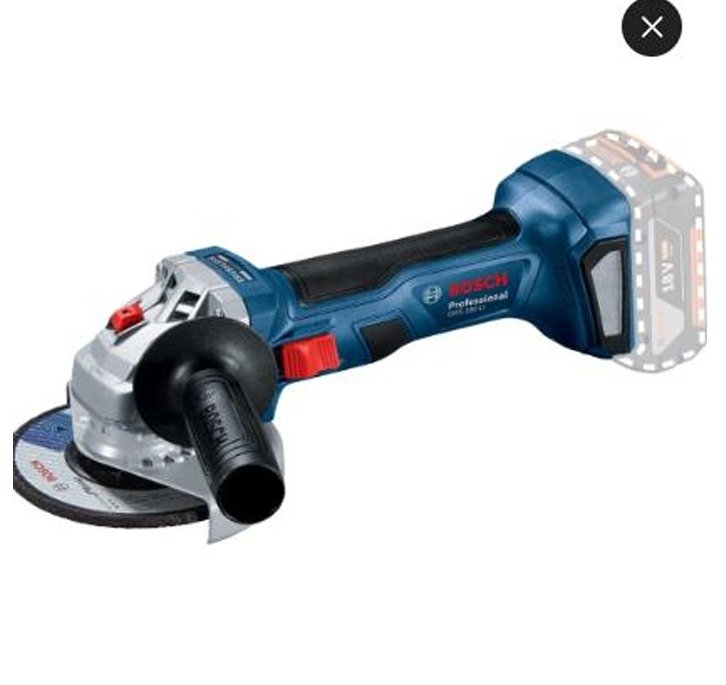
Key features
Dimensions
- Diameter: 4 inches (100mm), a standard size compatible with most small angle grinders.
- Thickness: Grinding wheels are typically thicker than cutting wheels, often 6mm or more, to handle the heavy side-pressure of grinding.
- Bore Size: The central hole size, or arbor hole, is typically 16mm, designed to fit securely on the angle grinder spindle.
Materials
- Abrasive grains: The wheel’s cutting action comes from abrasive grains like aluminum oxide, which is used for general-purpose metal grinding. Higher-performance wheels may use zirconia alumina for more aggressive grinding on hard metals.
- Bonding: A high-quality resin bond holds the abrasive grains together, ensuring the wheel is durable and safe for high-speed rotation.
- Reinforcement: Many wheels are reinforced with two or more layers of fiberglass mesh for added safety and strength, especially against lateral stress.
Performance
- Aggressive grinding: The wheel’s composition and high grain concentration allow for aggressive material removal, which is beneficial for tasks that require shaping and smoothing.
- Smooth operation: Quality grinding wheels are balanced and designed for smooth, consistent performance, reducing user fatigue and improving control.
- Durability: Made to be wear-resistant, the wheel provides a long service life and high grinding performance, especially when used on compatible materials.
- Application-specific designs: Some wheels are specifically designed for particular materials, such as aluminum oxide for steel and cast iron, or specialty alloys for stainless steel


Reviews
There are no reviews yet.